Quick answer
Choose fox fur when your collection needs a light, voluminous, flowing silhouette with a wide natural color range — long coats, wraps, stoles and trims for women's luxury lines. Choose raccoon fur when you need a denser, heavier, wind-resistant material for structured jackets — parkas, bombers and aviator styles, including men's lines.
Fox is generally the more expensive pelt and the more delicate garment. Raccoon is generally the more affordable, durable option with a more casual character. The right choice depends on your target market, price point, silhouette and customer expectations.
Fox: long, flowing, dramatic. Raccoon: structured, compact, functional.
Fox: women's luxury, evening. Raccoon: casual, men's lines, cold windy markets.
Fox: generally higher. Raccoon: generally the affordable real-fur entry point.
Key terms to know
What determines a garment's look and feel is the quality and ratio of two hair layers, not just the species name:
- Guard hair — the long outer hairs that carry the visible color, sheen and texture, and provide the first layer of weather resistance.
- Underfur — the short, dense, soft layer close to the skin that traps air and does most of the insulating work.
- Pelt — the tanned skin with the hair attached; pelt size, density and suppleness are the core quality factors.
- Sheared fur — guard hair cut to a short, even pile, changing both the look and the hand feel.
Fox fur at a glance
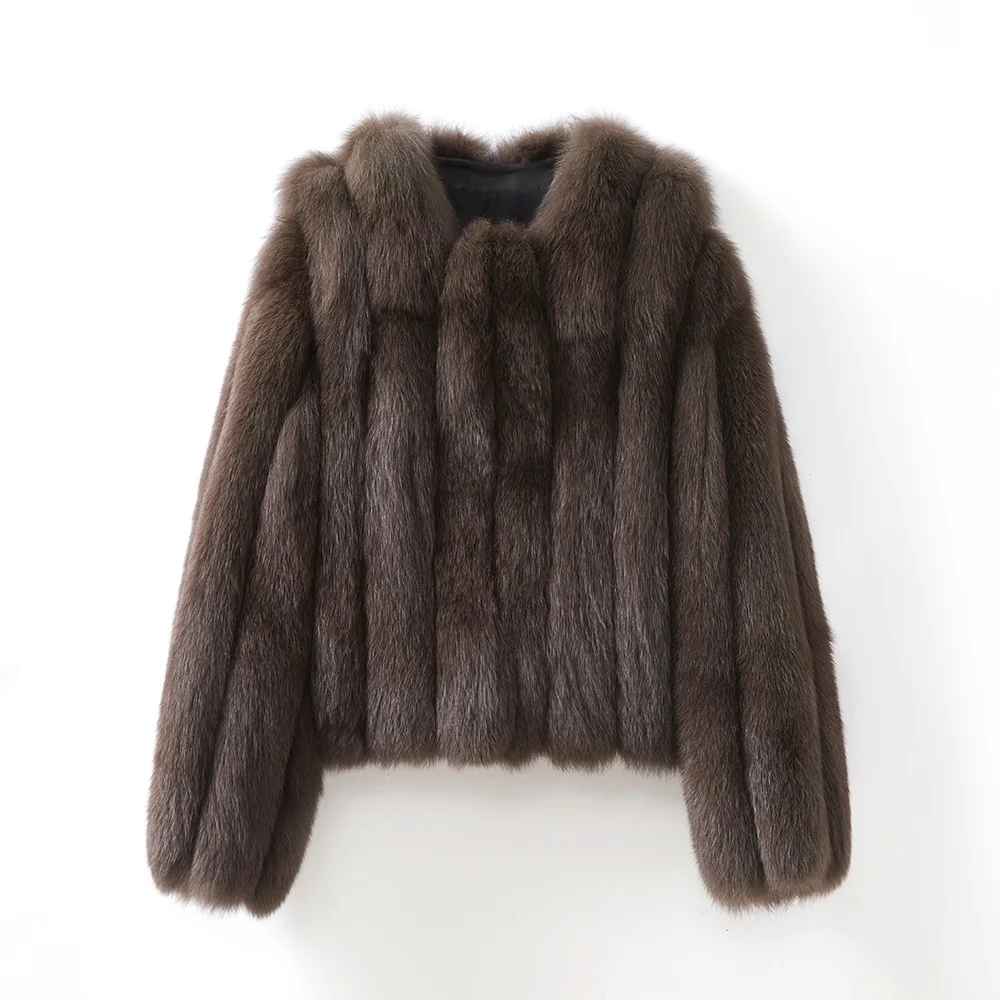
Guard hair. Long, fine and silky, with a visible sheen. Fox guard hair is among the longest of the commercial furs, giving fox garments their characteristic movement and volume.
Underfur. Soft and dense. The combination of long guard hair and airy underfur creates loft that traps body heat — strong insulation in still cold, but less wind-resistant than denser furs.
Colors. The widest natural range of any commercial fur — white (arctic), red, blue, silver, cross and golden phases — and it dyes well for color-matched brand programs.
Typical garments. Full-length coats, wraps, stoles, shawls, collars and trims, hoods — the classic material for women's luxury and evening outerwear.
Raccoon fur at a glance
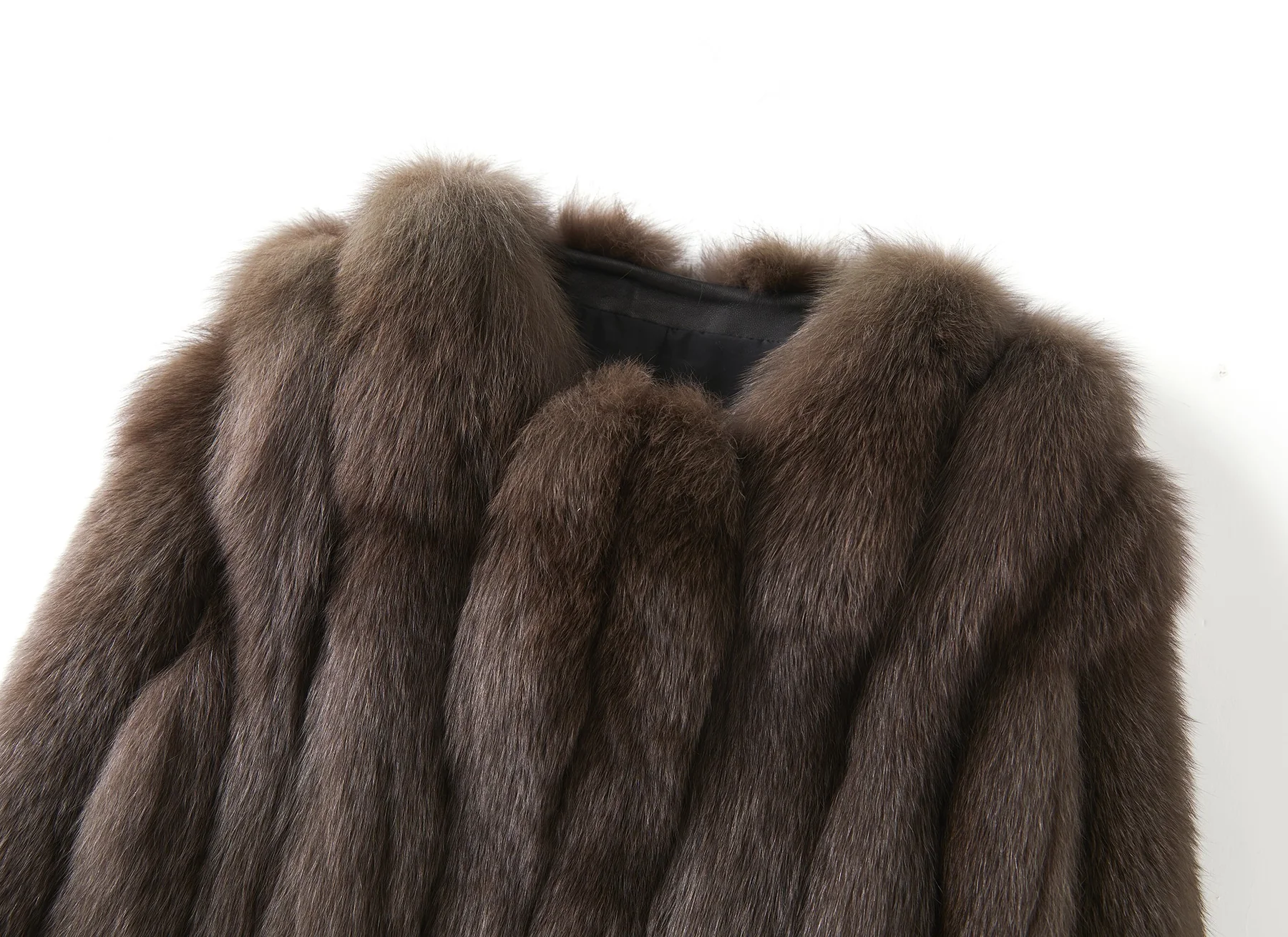
Guard hair. Medium length, thicker and firmer than fox, with the banded coloring typical of the animal — a dark tip, lighter middle and dark base. The texture is sturdy and more casual.
Underfur. Very dense — this is the layer that makes raccoon garments naturally wind-resistant and more substantial than fox at the same coverage.
Colors. Natural grey-brown with banding. Raccoon is frequently dyed (dark brown and black are common) and can be sheared to a plush, short pile that completely changes the look and hand feel.
Typical garments. Jackets, parkas, bomber and aviator styles, men's casual lines, and collars or trims on other outerwear.
Fox fur vs raccoon fur: side-by-side
| Factor | Fox fur | Raccoon fur |
|---|---|---|
| Guard hair | Long, fine, silky, glossy | Medium, thicker, firm, banded |
| Underfur | Soft and dense | Very dense |
| Weight | Lighter and voluminous | Heavier and compact |
| Warmth | High — loft insulation | High — density + wind resistance |
| Wind resistance | Moderate | Strong |
| Durability | More delicate | Durable and resilient |
| Natural colors | White, red, blue, silver, cross | Grey-brown with banding |
| Dyeing / shearing | Commonly dyed; shearing uncommon | Commonly dyed; shearing common |
| Typical styles | Long coats, wraps, stoles, trims | Jackets, parkas, bombers, aviators |
| Price positioning | Generally higher | Generally lower |
Production details that change the final garment
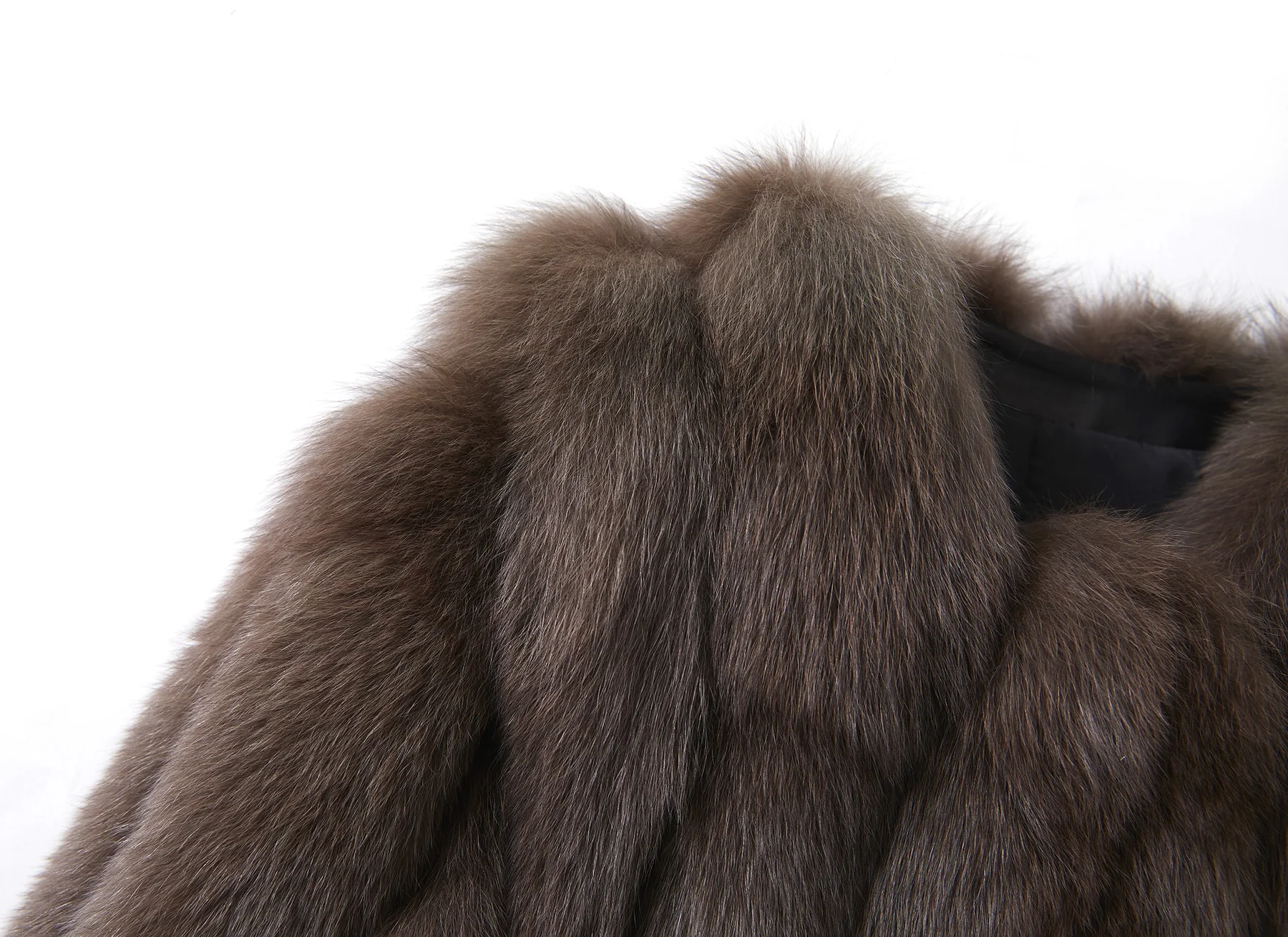
Two garments named the same fur can feel completely different depending on construction. Confirm these points with your supplier before sampling:
- Drape vs structure. Long fox guard hair drapes and moves; dense raccoon pile holds a structured shape. A design that works in one material will not automatically translate to the other.
- Guard hair loss. Some guard hair release in early wear is normal for real furs, but the degree depends on pelt quality and processing. Ask what the factory's standard is and how it is checked before shipment.
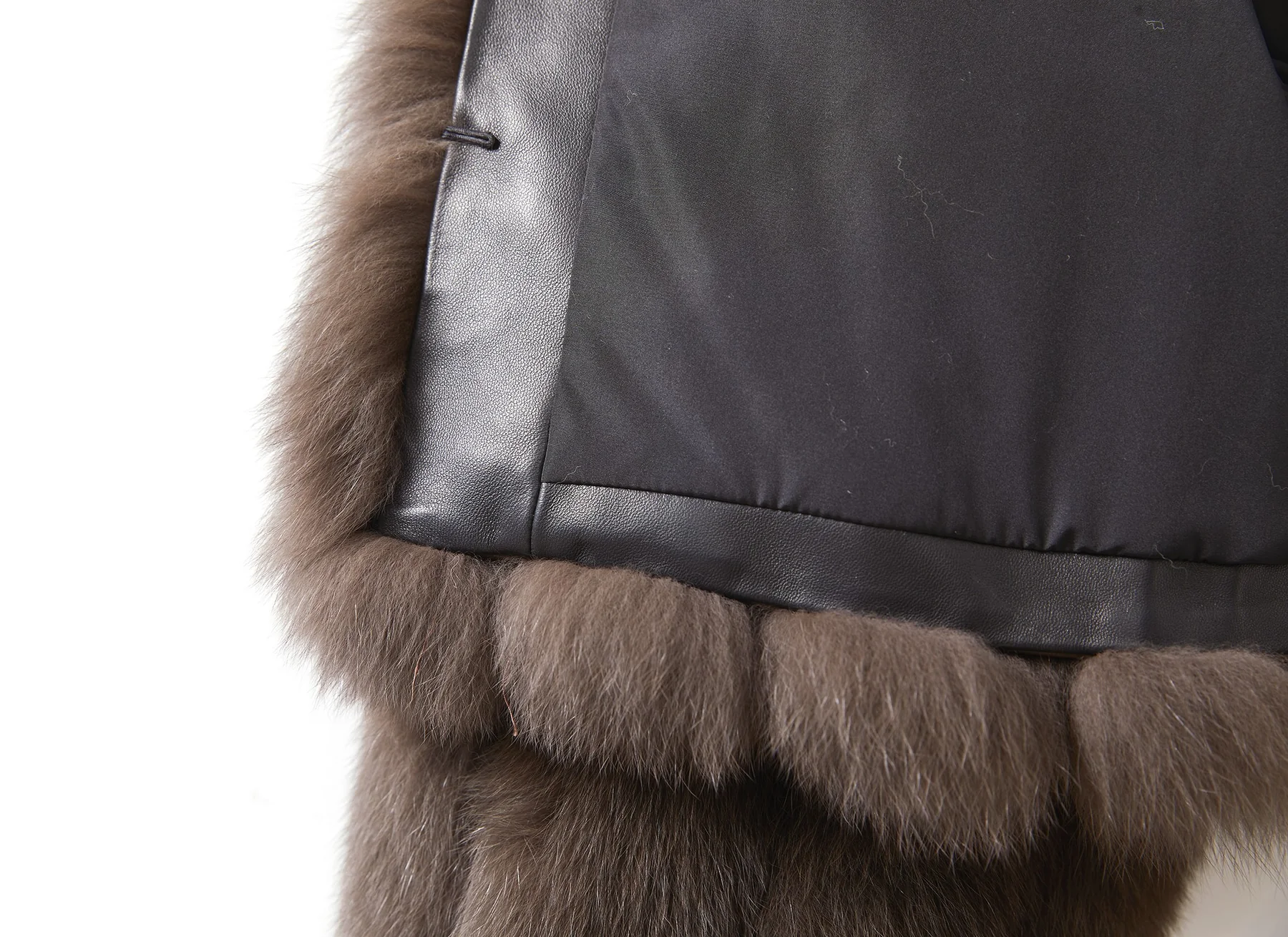
- Lining and interlining. Windproof linings change the warmth story of both materials. Specify lining fabric and construction in your brief.
- Dyed batches. Color programs depend on dye-batch control. Ask how the factory matches dye lots across pelts and manages shade variation.
- Sheared finishes. Sheared raccoon is a different material with a different hand and silhouette than full guard hair. Decide the finish first.
Which one fits your collection?
Answer four questions — not brand folklore:
- Silhouette — Long, flowing and dramatic → fox. Short, structured and functional → raccoon.
- Weight expectation — Customers who want light warmth → fox. Customers who want a substantial, solid feel → raccoon.
- Weather — Still cold (city evenings, dry cold) → fox. Cold plus wind and snow → raccoon.
- Price point — Entry real-fur price → raccoon. Premium program → fox carries that positioning.
Before you send an inquiry
A complete brief saves a round of sampling. Include these nine points in your first message:
- Species and origin preference
- Natural or dyed (Pantone reference)
- Full guard hair or sheared
- Garment style (tech pack or reference image)
- Size range and grading rules
- Quantity per style and color
- Sample and bulk lead time needed
- Destination country and label requirements
- Price terms (FOB or DDP)
Real fur is regulated by destination market
Fox and raccoon fur are animal furs, and importing them is regulated differently by country:
- The U.S. FTC Fur Products Labeling Act requires fur products to be labeled with the animal's name, the country of origin and other required disclosures.
- In Europe, real fur import and sale are under political review — the UK has debated an import and sale bill, and the EU is reviewing fur-free proposals.
- International trade in some fur species falls under CITES; your supplier should be able to state the species and origin.
Buyer FAQ
Is fox fur or raccoon fur warmer?
Both are very warm, but in different ways. Fox fur insulates with loft — long, airy guard hair traps warm air. Raccoon fur insulates with density — a thick underfur that also blocks wind. For cold, windy conditions, raccoon is usually the stronger choice; for light, dry cold, fox feels softer and lighter.
Is fox fur more expensive than raccoon fur?
Generally yes. Fox pelts are usually priced higher than raccoon pelts, and the gap widens for large, uniform, light-colored pelts such as white or silver fox. Exact prices depend on grade, pelt size, color and processing — confirm current quotes with your supplier.
Is raccoon fur heavier than fox fur?
Generally yes. Raccoon garments are denser and feel more substantial than fox garments of the same coverage. If garment weight matters to your customers, ask your supplier for the finished weight of a sample before committing.
Can fox and raccoon fur be dyed or sheared?
Both can be dyed. Dyed fox is widely used for brand color programs; raccoon is also commonly dyed and can be sheared to a short, plush pile that changes the look and hand feel. Specify the finish before sampling.
Which fur is more common for men's jackets?
Raccoon is more common in men's casual and aviator styles because it is durable and wind-resistant. Fox is more common in women's luxury coats, though fox trims and hoods appear on both.
Are fox and raccoon fur legal to import?
It depends on the destination country. Real fur imports are restricted or under review in parts of Europe — the UK has debated an import and sale bill, and the EU is reviewing fur-free proposals — while the U.S. requires fur labels to state the animal name and country of origin. Verify current rules for each destination market before ordering, and ask your supplier for the corresponding documentation.
Ready to brief your collection?
Send a written specification to receive an itemized, style-specific quotation.
- MOQ starts from 1 piece per style for samples or production orders
- Sample schedule confirmed after material, construction, measurements and color review
- Style-specific QC checklist and tolerances agreed before production
- Incoterm, freight and destination requirements confirmed in writing