Quick answer
The right material is not simply the most expensive or the most visually dramatic. It is the material that matches your target price, garment silhouette, destination market, care expectations and order volume—and that can be identified, sampled and documented consistently.
For an efficient sourcing decision, shortlist no more than two material routes, request labelled swatches, build one approved sample, and put the final material name, colour, measurements, workmanship standard, labels and required documents into the purchase order.
1. Start with the buying brief, not the material name
A supplier cannot recommend a reliable material from a reference photo alone. The same long coat silhouette might be developed in natural fur, shearling, wool/cashmere cloth or faux fur, but each route changes the cost structure, hand feel, weight, care method, minimum order and compliance work.
Before requesting prices, define these six points:
- Target customer and selling channel: luxury boutique, department store, online private label, uniform program or promotional wholesale.
- Target retail and landed-cost range: provide a workable range rather than asking for the “best price.”
- Silhouette and performance: fitted or oversized, short or full length, structured or fluid, statement volume or low bulk.
- Order structure: units per style, colour and size—not only the total collection quantity.
- Destination market: the country where the garment will be sold, because labelling, chemical, species and consumer-information requirements differ.
- Evidence required: material composition, origin, test scope, transaction documents, inspection standard and any customer-specific restricted-substance list.
2. Material comparison for private label buyers
The table below is a sourcing starting point. Natural variation, finishing and construction can change the result, so the final decision should always be based on labelled swatches and an approved sample.
| Material route | Typical visual / hand | Often considered for | Questions to settle before sampling |
|---|---|---|---|
| Fox fur volumelong guard hair |
Full, soft-looking surface with visible guard hair; appearance varies by species, origin, grade and finish. | Statement coats, collars, cuffs, hoods, trims and fashion-led outerwear. | True animal name, species/origin where required, pelt grade, colour, natural/dyed status, shade tolerance, shedding standard and matching method. |
| Raccoon-type fur texturedtonal contrast |
Longer, textured appearance with natural tonal variation. Commercial naming can be confusing. | Parkas, hoods, collars, trim and high-texture fashion pieces. | Exact species and legally correct market name, origin, colour consistency, pelt matching, treatment and destination-market documentation. |
| Leather structuredsmooth |
Lambskin can feel softer and more fluid; cowhide is often more substantial. Finish strongly affects touch and appearance. | Biker jackets, bombers, tailored outerwear, reversible or mixed-material styles. | Animal type, thickness range, finish, colour reference, grain, shade tolerance, panel matching, restricted substances and hardware performance. |
| Shearling wool-on-hidedouble-face |
Leather hide with wool attached; can be used wool-side in, out or as a reversible/double-face construction. | Aviator jackets, winter coats, vests and premium cold-weather pieces. | Skin type, wool length, nap and colour, leather-side finish, thickness, panel matching, seam construction, weight and care labelling. |
| Cashmere / wool cloth woven textiletailored |
Smooth woven or knitted textile. Cashmere percentage and fabric construction determine price and performance. | Tailored coats, capes, wraps and combination garments with fur or leather trims. | Exact fibre percentages, fabric weight, weave/knit, colourfastness, pilling, dimensional stability and legal fibre-content wording. |
| Faux fur engineered pilecolour options |
Pile fabric engineered through fibre, length, density, lustre, crimp, backing and finishing. | Fashion coats, colourful capsules, trims, accessories and animal-free material briefs. | Fibre composition, pile length/density, backing, weight, shedding, recovery, colourfastness, flammability where applicable and verified recycled-content evidence. |
3. Material-by-material sourcing notes
Fox fur: specify volume, colour and identity
Buyers often select fox fur for visual volume and long guard hair. However, “fox fur” alone is not precise enough for development. Ask the supplier to identify the material using the true animal name and any species or origin information required for your market. Then compare underfur density, guard-hair length, pelt size, colour, lustre and weight.
For dyed colours, approve a physical colour standard and define an acceptable shade range. For natural colours, agree how much variation is acceptable across panels and garments. Photographing a single sample is not a substitute for a bulk shade approval method.
Raccoon fur: confirm the exact species and market name
Raccoon-related trade names can be misunderstood across markets and languages. Do not rely on a translated catalogue name. Confirm the exact species, origin and permitted consumer-facing name for the destination country before approving labels, invoices or advertising.
From a product-development perspective, review tonal contrast, guard-hair pattern, underfur, weight, pelt matching and shedding. A hood trim and a full garment may require very different appearance and construction standards.
Explore UMAY raccoon fur styles.
Leather: define the hide and finish, not just “genuine leather”
A useful leather specification includes the animal type, thickness range, surface finish, colour, grain expectation, panel-matching rule and defect tolerance. Lambskin is commonly considered when buyers want a softer drape; cowhide may be selected when a more substantial hand is required. These are general tendencies, not guarantees—the tanning and finishing process can change the result.
Agree how colour will be evaluated, especially for black and dark fashion colours. Also specify zipper, snap and buckle finish; lining composition; seam type; reinforcement; and any destination-specific restricted-substance testing agreed with the supplier or laboratory.
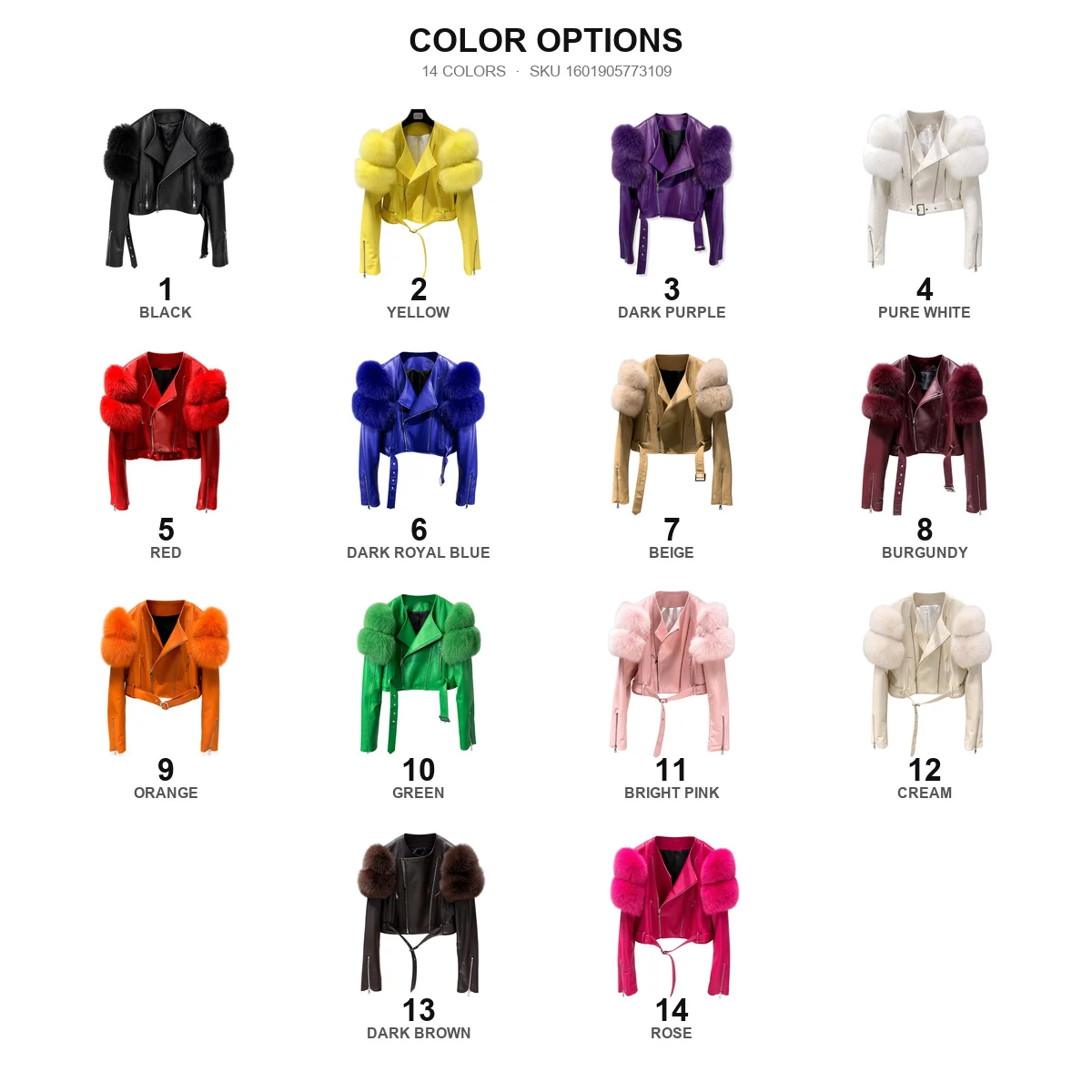
Review the UMAY sheepskin-leather and fox-fur style or check Alibaba SKU 1601905773109.
Shearling is not cashmere
These terms should never be combined as if they describe the same material. Shearling is sheepskin or lambskin with the wool attached to the hide. Cashmere is a fine fibre obtained from cashmere goats, spun into yarn and made into a textile. A wool/cashmere coat therefore needs a fibre-percentage and fabric specification; a shearling garment needs a skin, wool, leather-side finish and thickness specification.
This distinction matters for quotation, labels, care instructions, testing and search visibility. A page titled “cashmere shearling” without a precise explanation can confuse both buyers and search systems.
Explore UMAY shearling and cashmere-related styles.
What original curly-lamb sample photos can—and cannot—prove
The following photographs are UMAY's own showroom and construction images for a white cropped curly-lamb jacket. They visibly document the long curled pile, garment silhouette, leather-facing area, corded loop closure and smooth lining. They are useful evidence of the physical sample and construction details shown.
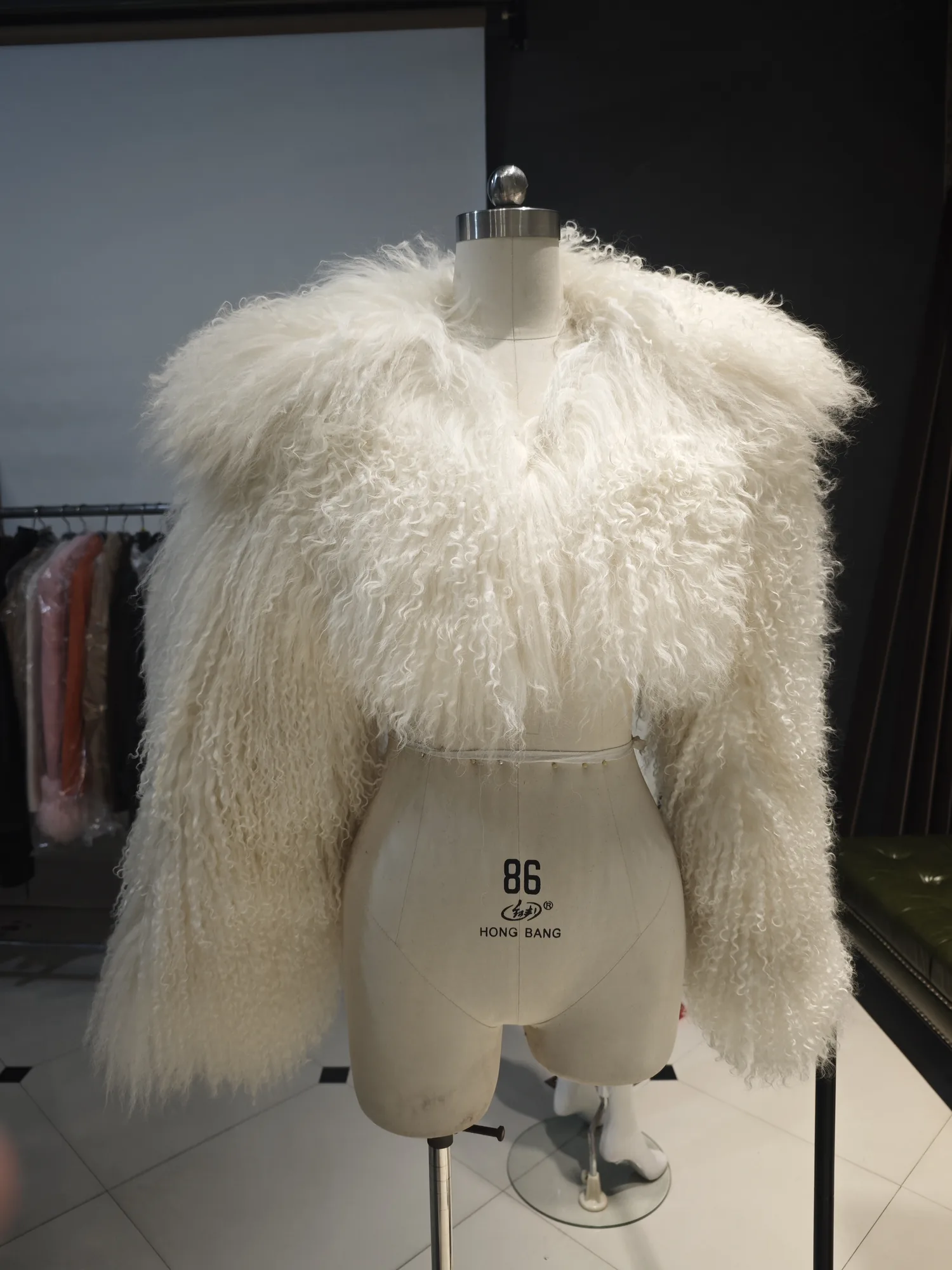
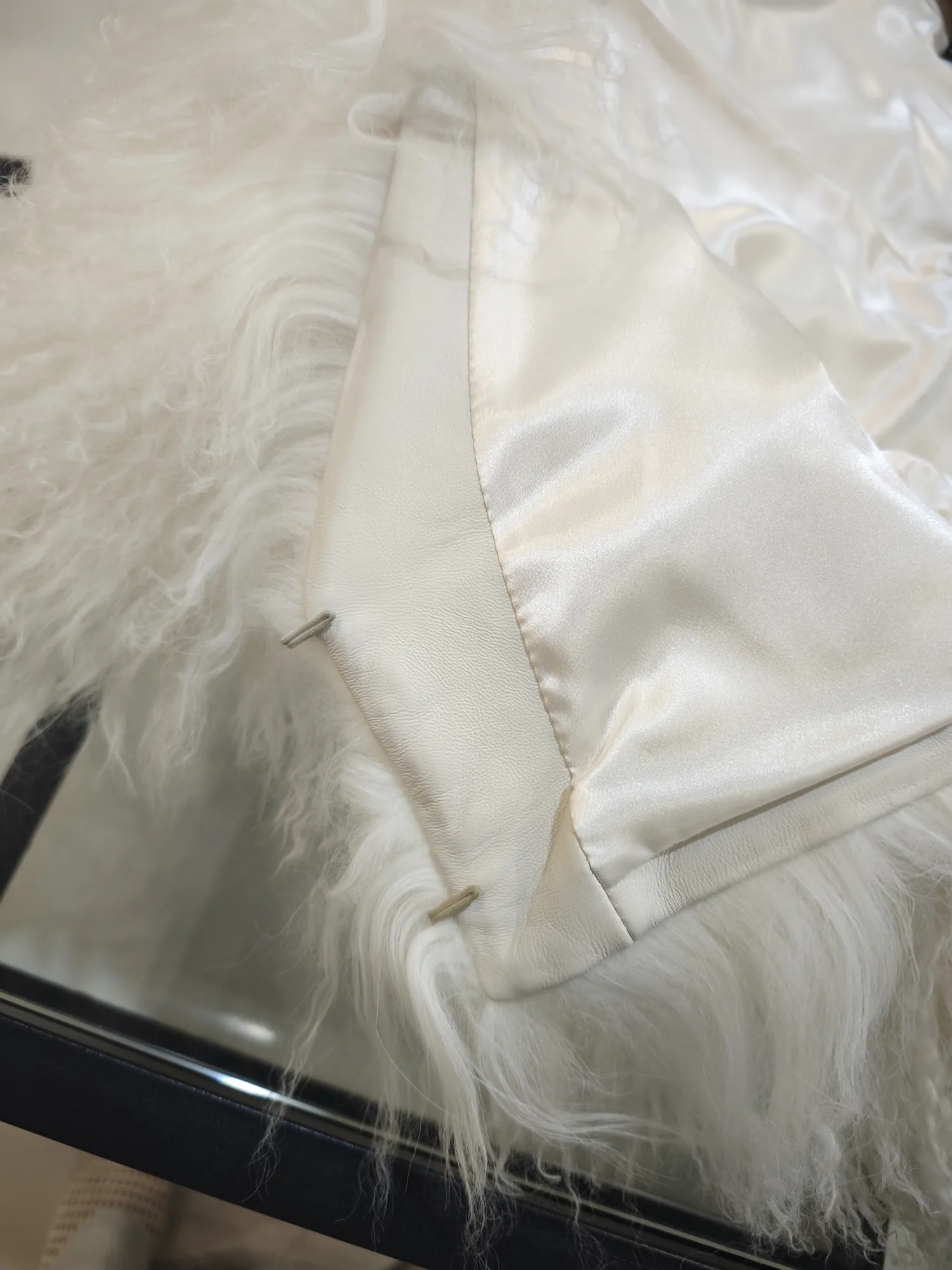
Photographs alone do not establish species, origin, grade, fibre content, test compliance or the construction of every bulk unit. Those items belong in the signed specification, approved counter-sample and inspection checklist. For this linked style, the public Alibaba listing describes “Curly Tan Sheep Fur” and a covered button, while the supplied sample photo visibly shows a corded loop; buyers should make the approved sample and order specification controlling.
Review the UMAY curly Mongolian-lamb product evidence or check Alibaba SKU 1601898292176.
Faux fur: pile engineering determines the result
Faux fur should not be purchased from colour and price alone. Specify fibre composition, pile length, pile density or fabric weight, backing construction, width, hand feel, lustre, recovery after compression, shedding expectation and colourfastness. For hoods and cuffs, test how the pile behaves after sewing and packing; for full coats, review drape, bulk and seam appearance.
If a material is described as recycled, lower impact or environmentally preferable, request evidence that supports the exact claim and applies to the supplied material. Avoid broad “eco-friendly” language without a defined, verifiable basis.
4. What to put in the tech pack
A clear tech pack shortens the quotation cycle and makes sample comments measurable. At minimum, include:
- Front and back flat sketches
- Reference images labelled as reference only
- Exact material description or requested options
- Colour standard and shade tolerance
- Garment measurements and tolerances
- Size range and order ratio
- Panel or pelt-matching direction
- Seam and construction details
- Lining and interlining specification
- Zippers, snaps, hooks and other trims
- Logo, main label, size label and care label
- Hangtags and packaging
- Destination country and selling channel
- Testing and document requirements
- Inspection level or agreed workmanship standard
- Target sample and delivery dates
5. Sampling, MOQ and lead time: ask for separate answers
There is no responsible universal MOQ for every fur or winter outerwear style. The workable minimum depends on material availability, colour, size ratio, trim sourcing, label customization, packaging and production method. A sample MOQ, fabric or pelt minimum, and bulk garment MOQ may all be different.
Request a written development summary with:
- sample cost and what it includes;
- sample lead time measured from material and tech-pack confirmation;
- bulk MOQ by style, material and colour;
- which custom colours or trims create separate minimums;
- bulk lead time and the event that starts the clock—for example, deposit, approved sample and confirmed materials;
- whether sample fees are refundable or creditable, and under what written conditions;
- shipping method, Incoterm and destination assumptions.
A precise answer such as “MOQ to be confirmed after material and colour selection” is more useful than an attractive number that does not apply to your actual style.
6. Quality control checkpoints before shipment
Quality expectations should be converted into checks that a supplier or independent inspector can perform. Use the approved sample, purchase order, tech pack and agreed test reports as the inspection baseline.
| Stage | What to verify | Evidence to retain |
|---|---|---|
| Incoming material | Material identity, colour/shade, hand feel, thickness or pile, visible defects and quantity. | Labelled swatches, material approval, batch photos and supplier documents. |
| Pre-production sample | Measurements, fit, construction, lining, trims, branding, labels and packaging. | Signed or digitally sealed approval with dated comments. |
| In-line production | Panel matching, cutting direction, seams, closures, symmetry, workmanship and repeat issues. | Inspection checklist, defect photos and corrective-action record. |
| Final inspection | Quantity, appearance, measurements, function, labels, packaging, carton marks and agreed tests/documents. | Final inspection report, packing list and released document set. |
For natural materials, define how natural variation will be judged. For dyed materials, use an agreed light source and shade standard. For faux fur, specify a practical shedding and recovery evaluation. For all garments, check closures, lining attachment, label accuracy and packing condition.
7. Compliance, labelling and marketing claims
Compliance requirements depend on the material, species, destination, product category and sales channel. The buyer should confirm the applicable rules before issuing final labels or marketing copy. The following checkpoints are a starting point, not legal advice.
- United States fur products: review the FTC requirements for the true animal name, fur origin, treatment such as dyeing or bleaching, and responsible business identity in labels, invoices and advertising.
- European Union textiles: verify fibre-content wording and the required indication when a textile product contains non-textile parts of animal origin.
- Species and trade controls: identify species accurately and check whether CITES or other import/export controls apply to the specific species and origin.
- Leather and textile testing: define applicable chemical, colourfastness, physical-performance and flammability requirements with a qualified laboratory for the destination and product type.
- Environmental claims: do not use broad claims such as “green,” “eco-friendly,” “non-toxic” or “sustainable” unless the precise claim is qualified and supported by evidence that matches the supplied product.
Official references: U.S. FTC fur labelling guidance, EU Regulation 1007/2011 on textile fibre names and labelling, CITES species checklist, and FTC Green Guides summary.
8. Ten questions to ask a potential supplier
- What is the exact material identification, composition, animal name or species, and origin information available for this option?
- Can you send individually labelled swatches for each quoted material and colour?
- Which parts of the reference design require construction changes for the selected material?
- What are the sample cost, sample lead time and revision terms?
- What is the bulk MOQ by style, material and colour, including any trim or dyeing minimum?
- Which measurements, appearance points and workmanship standards will be checked during production?
- How will natural variation, shade variation, panel matching and shedding be controlled?
- Which test reports and origin or trade documents can be supplied for this exact order?
- What information must be confirmed before the bulk-production lead time begins?
- Can the commercial invoice, labels, packaging and product description use one consistent and legally reviewed material name?
Frequently asked questions
Which material is best for a private label winter outerwear collection?
There is no universal best material. Choose according to target retail price, silhouette, destination market, care expectations and required documentation. Confirm the final choice through physical swatches and a pre-production sample.
What is the difference between shearling and cashmere?
Shearling is sheepskin or lambskin with the wool attached to the hide. Cashmere is a fine animal fibre that is spun into yarn and made into a textile. They require different specifications, labels and quality checks.
How should buyers compare fox fur and raccoon fur?
Compare verified species and origin, guard-hair length, underfur density, colour consistency, pelt size, dyeing or bleaching, shedding, weight and the intended silhouette. Use approved physical samples rather than trade names alone.
Can a supplier quote one MOQ for every style and material?
UMAY starts from 1 piece per style for samples or production orders. Material availability, colour, trims and construction still need to be confirmed in the written specification.
What should a fur or leather garment tech pack include?
Include the flat sketch, measurements and tolerances, material identification, colour reference, construction, lining, trims, branding, labels, packaging, destination country, test requirements and inspection standard.
Which quality checks should be completed before shipment?
Check approved materials and colour, measurements, workmanship, seam quality, closures and trims, lining, appearance, shedding where relevant, labels, packaging, quantity and any destination-specific reports agreed in the purchase order.
What compliance information should buyers request for natural fur?
Request the true animal name, species where needed, country of origin, whether the fur is dyed or otherwise treated, supplier identity, applicable trade documents and destination-market label information. Confirm requirements with a qualified adviser.
What information is needed for an accurate private label quotation?
Send a reference image or tech pack, material preference, quantity per style and colour, size range, branding and packaging needs, destination country, required documents and target delivery date.
Prepare a clearer sourcing request
To receive a material and development response for your next private label outerwear project, send:
- reference image or tech pack;
- material preference or two options;
- quantity per style and colour;
- size range;
- logo, labels and packaging needs;
- destination country;
- required tests or documents;
- target delivery date.
Explore related material categories
Also read: How to Choose a Fur Garment Factory in China — the 8-point checklist for vetting a fur factory before you commit.